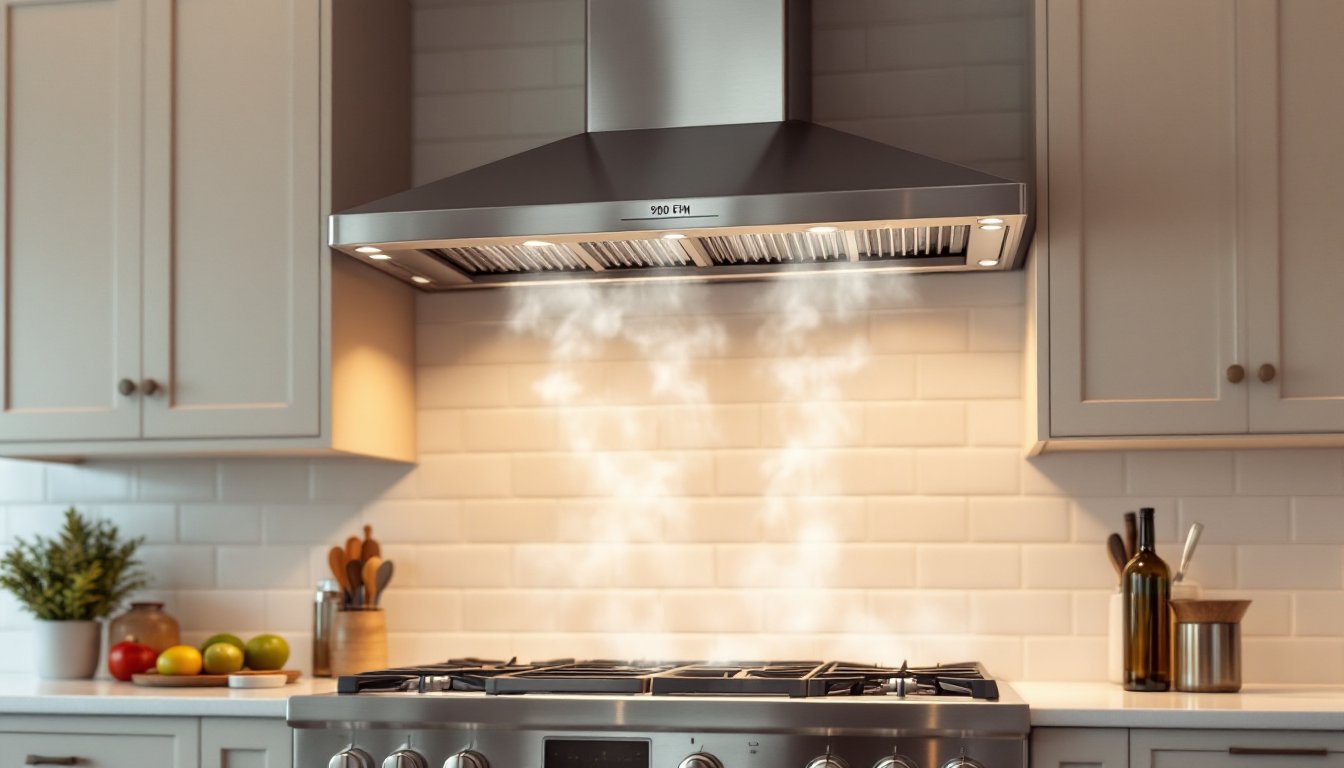
A 900 CFM range hood sits in that sweet spot for most kitchens, powerful enough to handle serious cooking but not oversized for typical home layouts. Whether you’re dealing with grease-heavy stir-fries, boiling pasta water, or just keeping steam from fogging your cabinets, understanding what a 900 CFM (cubic feet per minute) range hood does and whether it’s right for your space makes the difference between a workhorse and a noise-maker you’ll regret. This guide walks through what you need to know to pick the right 900 CFM hood, install it properly, and keep it running smoothly.
Table of Contents
ToggleKey Takeaways
- A 900 CFM range hood provides the ideal balance of power for most kitchens, efficiently handling steam, grease, and odors without oversizing for typical home layouts.
- 900 CFM hoods require proper ductwork sizing, straight runs to exterior walls, and adequate make-up air for gas ranges to prevent safety hazards and maintain peak performance.
- Choose a ducted 900 CFM hood over recirculating models whenever possible, as ducted systems permanently remove contaminants rather than recirculating filtered air back into your kitchen.
- Installation height (18–30 inches above cooktop), vibration isolation pads, and insulated ductwork are critical details that directly impact both safety and airflow efficiency.
- Expect to spend $300–$800 for the hood itself plus $500–$1,500 for professional installation, with ongoing maintenance limited to monthly filter cleaning and annual ductwork inspections.
- Prioritize motor quality and noise ratings when comparing models—a quieter permanent magnet or EC motor (under 70 dB) will provide years of reliable operation and comfort in daily use.
What Is a 900 CFM Range Hood and Why It Matters
CFM stands for cubic feet per minute, the volume of air a hood can pull out of your kitchen per minute. A 900 CFM range hood cycles roughly 900 cubic feet of air per minute out through ductwork (or filters, if it’s a recirculating model). To put that in perspective, that’s enough to clear a moderate-sized kitchen within a few minutes of cooking.
Range hoods pull up smoke, steam, odors, and grease particles before they settle on your walls, cabinets, and backsplash. Higher CFM ratings handle heavier cooking loads, think restaurant-style wok stations or multi-burner setups. A 900 CFM hood is genuinely middle-of-the-road: it’s not overkill for a 40-square-foot kitchen, but it won’t leave you struggling if you cook ambitious meals.
The reason CFM matters comes down to air changes per hour (ACH). Most building codes want at least 8–15 air changes per hour in a kitchen. Inadequate ventilation leads to moisture buildup, which damages drywall, warps cabinetry, and encourages mold. Oversized hoods waste energy and can create negative pressure that pulls air down your fireplace or gas water heater vent, a genuine safety concern.
Is 900 CFM Right for Your Kitchen?
Before settling on 900 CFM, measure your cooking style, stove type, and kitchen layout.
Cooking intensity and stove configuration matter most. If you cook with gas burners regularly, especially all four burners at once, 900 CFM is solid. Electric cooktops and induction ranges generate less heat and moisture, so some homeowners find 600–750 CFM adequate. Island stoves need more CFM than under-cabinet hoods because the hood must pull air from all directions.
Kitchen size and layout play a role. Most HVAC rules of thumb suggest sizing your hood based on stove length and positioning. A standard rule: multiply cooktop length (in feet) by 100. So a 3-foot stovetop suggests a 300 CFM minimum: a 4-foot range benefits from 400–500 CFM. A 900 CFM hood gives you breathing room if your kitchen layout spreads cooking heat over a wider area or if you have multiple heat sources (range plus a commercial-style oven, for instance).
Ductwork length and configuration affect real-world performance. If your exhaust duct runs 30 feet with multiple bends, you’re losing static pressure: a higher CFM rated hood compensates. Straight, short ductwork to an exterior wall allows a lower CFM to work effectively. According to HomeAdvisor, planning your exhaust path during design phase prevents undersizing later.
Noise tolerance is practical. Anything above 70 decibels gets loud fast. A 900 CFM hood running on high can hit 75–80 dB depending on motor quality and installation. If you cook in an open-plan kitchen with living areas close by, expect noise and factor that into your choice.
Types of 900 CFM Range Hoods
Ducted hoods exhaust air directly outside through ductwork (6-inch or 8-inch diameter standard). They’re most effective because they remove contaminants entirely rather than recirculating them. Ducted installation requires routing ductwork to an exterior wall or roof, which complicates retrofits in existing kitchens. Most homeowners doing a remodel opt for ducted if possible.
Recirculating hoods filter air through charcoal and HEPA filters, then push it back into the kitchen. They’re easier to install because no exterior ductwork is needed, but they’re less effective for heavy cooking and require frequent filter replacement (every 3–6 months for active cooks). A 900 CFM recirculating hood works best in kitchens where ducting outdoors isn’t feasible.
Wall-mounted hoods hang directly above the range on the wall. They’re the traditional choice and work well for ranges positioned against a perimeter wall.
Island hoods hang from the ceiling above island cooktops. They’re more expensive to install (ceiling cutouts, longer ductwork runs) and more visually prominent, but they’re often a design necessity.
Under-cabinet hoods sit within or below cabinet space. They save headroom and look compact, though they sometimes struggle with airflow if the cabinet opening restricts intake. The Kitchn highlights that style and function need to balance here, a cramped cabinet doesn’t help your CFM rating work for you.
Installation Considerations and Best Practices
Height and clearance matter. Stove manufacturers typically specify 18–30 inches clearance between cooktop and hood (check your range’s manual). Too low and you risk fire hazard and grease buildup on the hood: too high and airflow drops sharply.
Ductwork sizing and routing directly impacts performance. Use metal ducting (rigid or insulated flex) rather than plastic, which is a fire risk. A 900 CFM hood generally pairs with 6-inch diameter ductwork (standard for residential). Minimize elbows and bends, each turn costs air velocity. A straight shot to an exterior wall or roof is ideal. Insulated flex ductwork helps prevent condensation and heat loss, especially if ducts run through attics or unconditioned spaces.
Make-up air is critical if your kitchen is heavily sealed or if you have a gas range. As the hood exhausts air, replacement air (make-up air) needs to enter. Otherwise, the hood starves the range of oxygen, creating incomplete combustion and carbon monoxide risk. Some jurisdictions require manual make-up air dampers or automated systems in kitchens with gas appliances. Check your local building code or hire a pro to assess this.
Electrical and permits vary by location. In most places, a range hood installation requires a permit, especially if new wiring is needed. Many jurisdictions require a licensed electrician. Don’t skip the permit, it ensures code compliance and protects your home’s resale value and insurance.
Vibration isolation prevents rattling. Install rubber isolation pads between hood and mounting brackets to dampen motor vibration transmitted to cabinetry or walls. Good Housekeeping notes that this small detail eliminates annoying hum at night.
If ducting runs through an attic, insulate it. Warm, moist exhaust hitting cold attic air creates condensation that rots framing, an expensive problem that creeps up after a year or two.
Maintenance Tips for Long-Term Performance
A 900 CFM hood is a workhorse, but it needs regular care to stay efficient.
Grease filter cleaning is the top priority. Mesh or baffle filters catch grease before it clogs the motor and ductwork. Monthly washing (warm soapy water, or dishwasher for some models) keeps airflow open and prevents the hood from working twice as hard. A clogged filter doesn’t just reduce performance, it can overheat the motor.
Ductwork inspection every 6–12 months prevents buildup. Flex ductwork is prone to accordion creasing that traps grease: rigid metal ducts fare better but still accumulate residue. Snake a brush through annually or hire a professional duct cleaner for heavier buildup. Preventive cleaning extends hood life and maintains CFM performance.
Motor and bearing lubrication depends on your hood model. Some motors are permanently lubricated (sealed). Others have oil ports that need a few drops annually. Check your manual, this simple step prevents squeaking and bearing wear.
Damper operation keeps outdoor air from backdrafting into your kitchen when the hood is off. Test it quarterly to ensure it opens freely and closes fully. Rust or grease buildup can seize it: WD-40 and a brush usually free it up.
Seal around ductwork penetrations where the hood connects to wall or roof openings. Weather-strip and caulk these gaps to stop insects, cold air, and moisture from entering. Rechecking these seals annually prevents air leaks that reduce efficiency.
Finding the Best 900 CFM Hood for Your Budget
A 900 CFM hood ranges from roughly $300–$800 retail, depending on type, material, and features. Wall-mounted ducted models are usually the most affordable. Island hoods and designer finishes (stainless steel, custom trim) cost more. Recirculating models sit mid-range but require ongoing filter costs.
Budget considerations beyond purchase price include installation labor, ductwork materials, and electrical work. Professional installation often runs $500–$1,500 depending on complexity and your region. A simple under-cabinet retrofit costs less than rerouting ductwork for an island hood.
Feature comparison: Basic models have one or two speed settings and simple controls. Mid-range hoods add a third speed, better lighting (LED is standard now), and quieter motors. Premium models offer variable speed controls, humidity sensors, WiFi connectivity (gimmicky for most), and very quiet operation (under 65 dB).
Noise and motor quality correlate with price. A $300 hood might run 75–78 dB on high: a $600 hood with a better motor runs 68–72 dB. If you’re sensitive to noise or cook daily, the extra spend on motor quality pays back in comfort.
Look for: permanent magnet or EC (electronically commutated) motors, which run cooler and quieter than induction motors. Stainless steel or aluminum construction resists corrosion better than painted steel. Ball-bearing motors last longer than sleeve bearings. These small details aren’t sexy, but they determine whether your hood lasts 10 years or 20.
Conclusion
A 900 CFM range hood hits the practical middle for most home cooks. It handles typical daily cooking, clears steam and odors efficiently, and doesn’t overkill smaller kitchens. Verify it’s the right size for your layout and cooking style, plan your ductwork route before buying, and don’t skip the permit or professional installation if needed. Regular filter cleaning and annual duct checks keep it running at peak performance. When you’re ready to shop, balance CFM rating, noise tolerance, and long-term motor quality, cheap hoods age poorly, and you’ll live with the choice every time you cook.