A dedicated home theater recliner can transform your living room from a standard seating area into a genuine entertainment destination. Whether you’re planning a full basement renovation or just upgrading your movie-watching setup, theater recliners combine comfort, functionality, and style in ways standard furniture can’t match. With options ranging from budget-friendly single recliners to premium multi-seat configurations, there’s something for every space and preference. This guide walks you through everything you need to know, from understanding reclining mechanisms to selecting the right style for your home.
Table of Contents
ToggleKey Takeaways
- Theater recliners for home provide engineered support with lumbar positioning and adjustable footrests that reduce strain during extended viewing sessions.
- Three reclining mechanisms are available—manual recliners (affordable, no electricity), power recliners (convenient with USB charging), and motorized options (premium features like massage and memory presets).
- Material choice directly impacts longevity: leather offers durability and easy cleaning, microfiber provides stain resistance and color variety, while high-performance fabrics are best for active households with pets and children.
- Proper placement requires measuring doorways diagonally, allowing 18–24 inches of clearance in front of the footrest, and ensuring electrical outlets and climate control are adequate for your space.
- Theater recliners increase home resale value in markets where dedicated media rooms are sought-after, making them a practical long-term investment rather than a luxury add-on.
Why Theater Recliners Are Worth the Investment
Theater recliners aren’t just a luxury add-on: they’re a practical investment in your home’s functionality and your family’s comfort. Unlike standard couches or armchairs, dedicated theater recliners are engineered specifically for long viewing sessions. They offer proper lumbar support, adjustable footrests, and positioning that reduces neck and back strain, benefits that compound over hundreds of hours of use.
The resale value consideration matters too. Homes with dedicated media rooms command higher buyer interest, particularly in markets where entertainment spaces are sought-after features. A quality recliner is a fixed asset that stays with your home improvement project, much like built-in shelving or upgraded lighting.
Beyond the numbers, there’s the daily quality-of-life factor. After a long day, sinking into a properly supportive theater recliner while watching your favorite show or film isn’t frivolous, it’s legitimate self-care that your body will thank you for. The ergonomic benefit is real, especially if you have back issues or spend significant time seated.
Design flexibility is another advantage. Modern theater recliners come in hundreds of fabric and color options, meaning you’re not limited to bulky leather theater seats anymore. You can match your home’s aesthetic while gaining all the functional benefits of reclining seating.
Key Features to Look For When Choosing a Home Theater Recliner
Comfort and Reclining Mechanisms
The reclining mechanism is the heart of any theater recliner, and you have three main options: manual, power, and motorized with add-ons.
Manual recliners use a lever or pull handle to adjust the backrest and footrest independently. They’re affordable, require no electricity, and have fewer parts to fail. The trade-off is that you’re doing the work yourself, and consistent force is needed to lock them in place.
Power recliners use a single button or remote to move the backrest and footrest in tandem, usually toward a flat “zero gravity” position. They’re convenient, require one electrical outlet, and most modern versions have USB charging ports built into the armrest. Premium power recliners add massage functions, heat, and memory presets that remember your favorite positions.
Motorized mechanisms vary widely. Look for sealed gear systems to prevent dust accumulation, important in spaces where you’re already managing an entertainment system. Check the rated weight capacity (usually 250–400 lbs per seat) and ensure it matches your household needs.
When testing comfort, sit for at least 5–10 minutes in a reclining position, not just the upright position. Poor lower-back support becomes obvious only once you’re fully reclined. If buying online, read detailed reviews about long-term comfort: don’t rely on first-impression feel.
Material and Durability Considerations
Leather (genuine or bonded) is traditional for home theater because it’s durable, easy to clean, and doesn’t trap odors like fabric. Real leather develops character over time but requires periodic conditioning. Bonded leather is cheaper but more prone to peeling after 5–7 years of heavy use.
Microsuede and microfiber fabrics offer a softer feel, better stain resistance than traditional upholstery, and a wider range of colors. They’re family-friendly and pet-friendly, though not quite as durable as leather under heavy wear.
High-performance fabrics (like those used in athletic wear) are emerging in the recliner market. They resist spills, don’t absorb odors, and hold up to daily use with pets and kids. Expect to pay a premium, but the longevity justifies it if you have an active household.
Check the seam construction and stitching, watch for single-stitched seams that might separate. Ask about warranty length: reputable makers offer 3–5 year coverage on the frame and mechanism, not just cosmetic surfaces. Frame materials matter: hardwood or plywood beats particle board for long-term durability, especially if the recliner will see frequent adjustments.
Popular Styles and Design Options
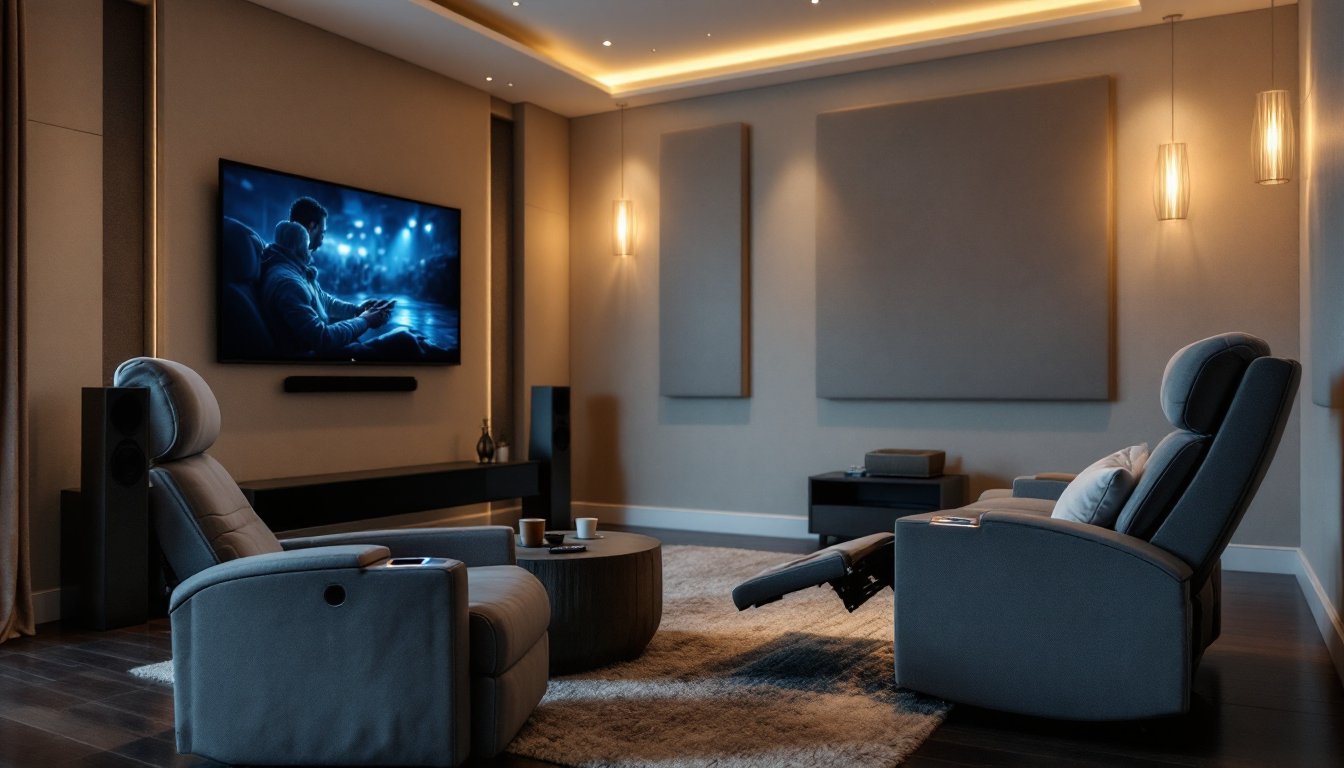
Theater recliners have evolved far beyond the stereotypical black leather theater seat. Today’s options blend function with modern interior design, so your seating doesn’t look out of place in a living room that doubles as a media space.
Single-seat recliners are the most flexible. They work in dedicated home theaters, media rooms, or as accent pieces in larger living areas. They’re easier to fit through doorways during installation (measure your hallways and door widths, a 30-inch seat can become 32–34 inches with armrests). Interior design platforms like Homedit regularly showcase how single recliners integrate into modern living spaces without dominating the room aesthetically.
Sectional theater seating combines multiple recliners into an L-shape or straight configuration. These take up substantial floor space but maximize seating for group viewing. Many come with cup holders, storage compartments, and power controls built into the armrests. If you’re planning a sectional installation, measure your room carefully, allow 12–18 inches behind the seating for cables and heat dissipation.
Loveseat recliners (two-seat configurations) are the Goldilocks option for families. They fit standard living rooms better than full sectionals and provide seating for two without dominating the space.
Reclining chairs with nailhead trim, tufting, or fabric patterns add visual interest instead of reading as dedicated theater seating. These work well if your home theater shares space with a living area and you want cohesive design language across the room.
Color matters practically, not just aesthetically. Lighter fabrics show dust and spills: darker tones hide wear but show dust more in bright light. Neutral grays and taupes are popular because they don’t trend in or out and work with most decor changes.
Setting Up Your Home Theater Space
Placement and preparation are just as important as the recliner itself. Here’s what you need to know before ordering.
Measure your doorways and hallways first, the largest diagonal measurement determines whether the recliner can physically enter your space. If you’re ordering a power recliner with a motorized mechanism, the assembled width (with armrests) may exceed your doorway. Some retailers offer white-glove delivery that includes disassembly/reassembly: factor this cost into your decision.
Account for adequate clearance in front of the recliner. You need 18–24 inches of space between the footrest and the screen or wall so you can fully extend without hitting anything. If you’re installing multiple recliners, ensure 12–18 inches between seat edges for armrest movement and comfortable passage.
Floor prep matters. Theater recliners are heavy (150–250 lbs per seat). If your floor is soft (plywood subfloor with thin carpet), consider floor protectors or a hardwood base to prevent sagging over time. Concrete or tile floors don’t need this, but they’ll show wear marks if the recliner moves frequently.
Electrical planning is critical for power recliners. Identify outlet locations near where you’ll place the seating. A power strip with surge protection is essential if your recliner shares outlets with your TV, sound system, and other equipment. Daisy-chaining power strips isn’t safe: have an electrician add dedicated outlet runs if needed.
Climate control affects comfort and longevity. Home theaters in uninsulated spaces or basements develop moisture issues that degrade upholstery and mechanisms. If your media room isn’t climate-controlled, a small dehumidifier will extend the life of your recliner and protect your equipment.
Resources like The Handyman’s Daughter cover practical setup guides for dedicated media rooms, including cable management and room prep steps. For broader design inspiration on theater room aesthetics, HGTV features real examples of how professional designers layout home media spaces.
Anchoring considerations: If you have young children or live in an earthquake zone, secure heavy sectional seating to studs or the floor using safety brackets. Check your local building codes, some jurisdictions require this for furniture that could tip.
Conclusion
Theater recliners are a smart investment when you prioritize quality construction, appropriate sizing for your space, and honest assessment of what features you’ll actually use. Skip the unnecessary add-ons that look good in marketing but add cost without real benefit, focus on the reclining mechanism, fabric durability, and comfort during an extended sit. Measure twice, order once, and your home theater setup will deliver comfort and satisfaction for years to come.