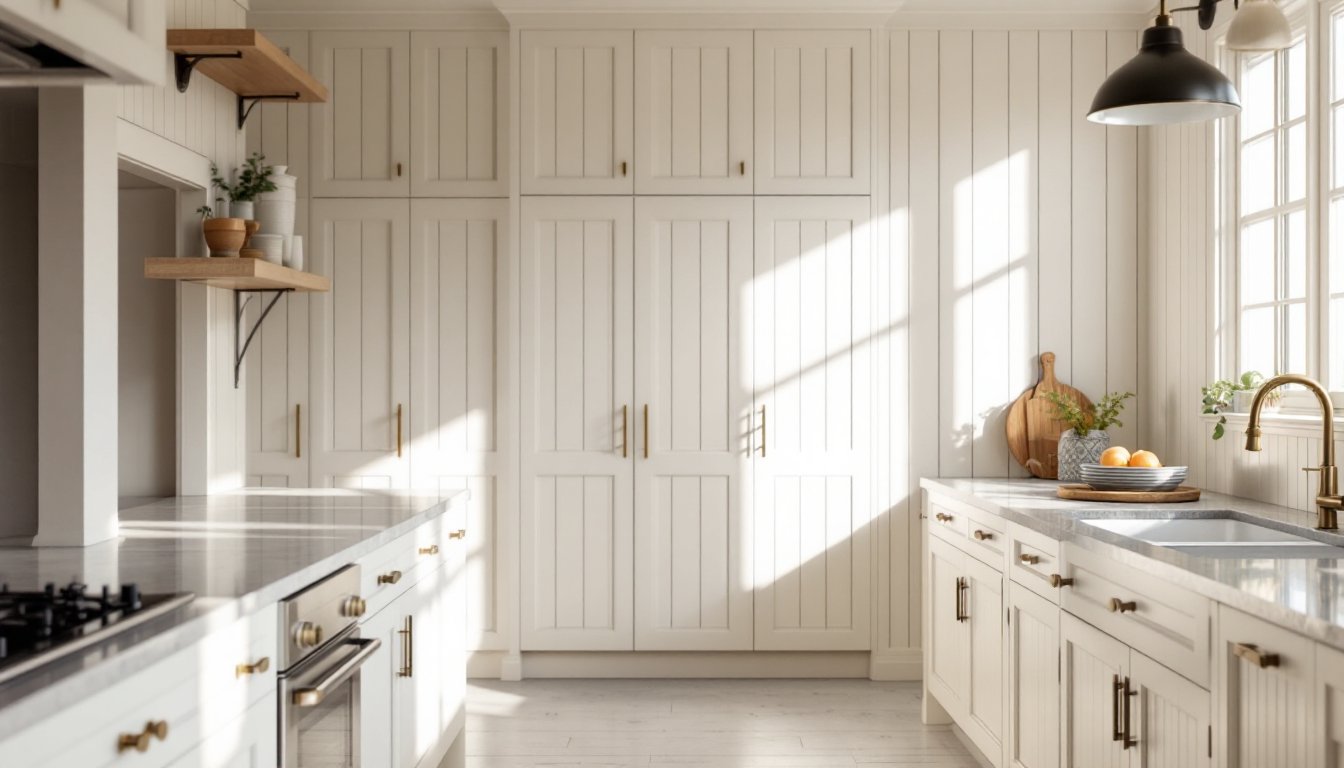
Beadboard cabinets bring a clean, cottage-style charm to kitchens without the fussiness of ornate trim. If you’re considering a cabinet refresh or building a kitchen from scratch, beadboard offers a middle ground: more character than flat-front shaker styles, but simpler and more practical than heavily carved options. This guide walks through what beadboard cabinets are, why they work in modern homes, what to expect during installation, and how to budget for the upgrade.
Table of Contents
ToggleKey Takeaways
- Beadboard kitchen cabinets feature vertical grooves that add subtle texture and character while maintaining a clean, cottage-to-modern aesthetic without ornate complexity.
- Solid wood beadboard is more durable and refinishable than engineered alternatives, but costs more; engineered options offer better moisture stability at a lower price point.
- Proper ventilation and regular maintenance with a damp cloth keep beadboard cabinets clean and protected from moisture damage, which can cause swelling at seams.
- Beadboard cabinet costs range from $100–$300 per linear foot for stock options to $600–$1,200+ for custom solid wood, plus installation and potential hidden costs for structural or electrical changes.
- Painted finishes in white, cream, or muted colors are most common, while stained finishes highlight wood grain; hardware choice and two-tone designs offer additional customization without changing the cabinet doors themselves.
What Are Beadboard Kitchen Cabinets?
Beadboard refers to a type of cabinet door or panel face featuring a series of narrow, vertical grooves (called beads or reeds) running the full height or width. The grooves are typically ⅜ inch to ½ inch wide and evenly spaced, creating a subtle shadow-line texture that catches light and adds visual depth.
These grooves can be routed (cut) into solid wood, or the beadboard effect can come from a veneer or MDF core with a routed or embossed face. Real wood beadboard, traditionally made from pine, poplar, or birch, is more durable and takes stain or paint better, though it costs more. Engineered alternatives (veneer over plywood or MDF) are budget-friendlier and more stable in moisture-prone kitchens, but they can’t be refinished as easily if damaged.
Beadboard is distinct from shaker cabinets (which are flat-front or have a simple frame-and-panel design) and from raised-panel or cathedral doors (which have a curved or angled field). The signature texture is what makes it recognizable, and it works equally well painted or stained, depending on your kitchen’s overall aesthetic.
Why Choose Beadboard Cabinets for Your Kitchen
Style and Aesthetic Appeal
Beadboard cabinets strike a balance between farmhouse and modern design. The clean vertical lines feel fresh, not dated, while the subtle texture adds character that flat-front cabinets lack. They work in cottage, coastal, transitional, and even contemporary kitchens if finished right.
The vertical grain-like effect naturally elongates the eye, making kitchens feel taller without adding visual clutter. If you’re working with a smaller kitchen or limited ceiling height, beadboard’s clean geometry helps. Painting beadboard a crisp white or soft cream is a classic pairing, but muted blues, greens, or warm grays are equally effective. The grooves create subtle shadows that prevent a monochromatic room from feeling flat.
Browsing design inspiration galleries can help you visualize how different finishes and hardware suit your space. Hardware choice matters too, brushed brass, black iron, or simple cup pulls all change the beadboard’s personality without changing the cabinet door itself.
Durability and Maintenance
Solid wood beadboard cabinets are built to last. The grooves don’t trap more dust or debris than any other cabinet style, regular wiping with a damp microfiber cloth handles fingerprints and kitchen grime. If the finish is polyurethane or conversion varnish (common in modern cabinet construction), it sheds liquids and cleans as easily as any painted cabinet.
The main consideration is moisture. Kitchens with poor ventilation can cause wood cabinets to swell slightly at the seams where grooves meet the frame. Proper exhaust ventilation over the cooktop is essential, not just for cooking fumes but for moisture control. Engineered beadboard (veneer over plywood) handles humidity more uniformly than solid wood, since the plywood core is dimensionally stable.
Scuffs and dings in painted beadboard are easy to touch up with a brush and a can of matching finish. Stained beadboard may require sanding and restaining small areas, so it demands slightly more care if you have young kids or heavy kitchen traffic.
Installation and Design Considerations
Beadboard cabinet doors are installed the same way as any inset or overlay door, hinges are mounted to the frame (called a stile) or to the cabinet box edge, depending on the overlay style. Most modern kitchens use overlay hinges, which allow the door to sit fully in front of the cabinet box for a sleeker look. Inset doors sit flush inside the frame and require tighter tolerances and more precise installation.
Before ordering, confirm the cabinet construction. Are the cabinet boxes face-frame (traditional) or frameless (European)? Face-frame boxes have a wooden frame around the opening where doors attach: frameless boxes use the cabinet sides directly. Beadboard doors work with both, but dimensions and hinge requirements differ. If you’re retrofitting existing cabinets, measure the door opening and rail width carefully, order new doors with at least ⅛ inch clearance on all sides for smooth operation and seasonal wood movement.
One practical tip: beadboard looks best when the grooves run vertically on tall doors and horizontally on shorter drawers or cabinet panels. Most cabinet makers offer both options, but it’s worth specifying if ordering custom or semi-custom doors.
Ventilation is critical. Install a range hood above the cooktop, vented outside (not recirculating). Kitchens without proper exhaust will accumulate grease and moisture on cabinet surfaces, and the grooves can trap particulate matter over time. A damp cloth handles regular cleaning, but kitchens with inadequate ventilation need more frequent deep cleaning.
Cost Factors and Budget Planning
Beadboard cabinet costs vary widely based on materials, finish, and whether you’re buying stock, semi-custom, or full custom cabinets.
Stock beadboard cabinets start around $100 to $300 per linear foot (measured along the wall) for painted, engineered options. These come pre-made in standard widths (12, 15, 18, 24 inches) and depths, with limited finish or hardware choices. Delivery and installation fees add another $500 to $2,500 depending on cabinet count and your region.
Semi-custom beadboard ranges from $300 to $600 per linear foot. These are built to order with more finish options, custom heights, and hardware selections, but still from standard templates. Lead time is typically 4-8 weeks.
Custom beadboard cabinets from a local cabinetmaker run $600 to $1,200+ per linear foot. This includes solid wood, detailed joinery, and finishes matched to your exact specifications. Lead time is longer (8-16 weeks), but quality and customization are top-tier.
Price premiums apply for: solid wood (vs. veneer), specialty finishes (faux-finishing, staining, hand-painting), soft-close hinges, pull-out shelves, and crown molding or toe-kick details.
Don’t overlook hidden costs. Removing and disposing of old cabinets runs $500 to $2,000. If your wall framing is uneven or plumbing/electrical needs relocation, add $1,000 to $5,000. A full kitchen reface or replacement is a major project, budget for permits if required (usually needed for plumbing or electrical changes) and hire a licensed contractor if structural modifications are involved.
Beadboard Cabinet Styles and Finishes
Beadboard pairs well with nearly any finish, so personal preference and your kitchen’s existing colors guide the choice.
Painted finishes are most common. A crisp white or off-white pairs with virtually any countertop and backsplash. Soft grays and warm creams offer subtlety without looking bland. For bolder kitchens, muted sage green, dusty blue, or warm taupe work if paired with neutral countertops and hardware. Painted beadboard requires a quality primer (such as Sherwin-Williams ProClassic or Benjamin Moore Advance) to ensure even coverage in the grooves and prevent bleed-through from wood stains or tannins.
Stained finishes highlight the wood grain and work best with solid wood beadboard. Light natural stains (like golden oak or honey) feel warm and traditional. Dark stains (espresso, walnut, or ebony) suit contemporary kitchens and hide fingerprints well. Matte, satin, or semi-gloss polyurethane topcoats all work: matte is trendier but shows dust more easily, while semi-gloss is practical for kitchens with frequent cleaning needs.
Two-tone designs combine painted beadboard on lower cabinets (often white or cream) with stained wood on uppers, or vice versa. This breaks up visual monotony in larger kitchens and works in transitional or cottage styles. Kitchen design resources often showcase two-tone beadboard schemes alongside hardware and hardware finishing options that tie the palette together.
Hardware finishes, brushed brass, matte black, polished chrome, or stainless steel, shift beadboard’s personality without changing the cabinet itself. Simple cup pulls or bar pulls feel contemporary: knobs feel more traditional. Mixing hardware finishes (brass pulls on uppers, black knobs on lowers) adds visual interest but requires discipline to avoid a chaotic look.
Glazing or distressing is optional. A glaze applied over painted beadboard highlights the grooves by shadowing them, adding depth for a more period look. Hand-distressing or sanding edges creates a rustic feel. Both require skilled application and add cost: consider whether they suit your overall kitchen aesthetic before committing.
For inspiration and to see beadboard in a range of settings, photo galleries with 75+ examples show realistic finishes, hardware pairings, and how beadboard performs in different lighting and cabinet configurations.