Your air conditioner is running, but the cooling isn’t what it used to be. You notice it cycles more often, or the evaporator coil is frosting up. A refrigerant leak is a likely culprit. Finding that leak before it ruins the compressor, the expensive heart of your system, makes all the difference. An A/C leak detector is the fastest way to pinpoint where refrigerant is escaping. Whether you’re a hands-on homeowner or a DIY enthusiast, learning to use one takes about five minutes of hands-on work and can save you hundreds in unnecessary service calls. This guide walks you through what these tools are, which type suits your situation, and how to deploy one effectively.
Table of Contents
ToggleKey Takeaways
- An A/C leak detector identifies refrigerant escapes in seconds, helping you catch problems before a small leak becomes a $3,000–$5,000 compressor replacement.
- Electronic leak detectors ($30–$150) work fastest for major leaks, while dye-based kits ($20–$50) excel at pinpointing exact leak locations and detecting slow seeps.
- You can use an A/C leak detector yourself in about 5–10 minutes by systematically checking refrigerant lines, fittings, and coil connections with either an electronic sensor or UV flashlight.
- Refrigerant repair and recharging must be performed by an EPA-certified HVAC professional; homeowner DIY sealing is illegal and risks severe compressor damage.
- Early leak detection and professional repair keep your system running efficiently and compliant with EPA regulations, while delaying action can cost hundreds in unnecessary service calls.
What Is An A/C Leak Detector And Why You Need One
An A/C leak detector is a handheld instrument designed to sniff out refrigerant escaping from your cooling system. Refrigerant, whether it’s R-22 (Freon), R-410A, or a newer blend, is a pressurized gas that circulates through copper tubing in your indoor and outdoor units. A pinhole leak, corrosion, or a vibration crack can let that gas slip away, and it happens silently. Without detection, you might not know there’s a problem until the system loses enough refrigerant that it stops cooling effectively or the compressor overheats and fails.
Why detect leaks early? A small refrigerant leak ignored for weeks can cost you $3,000 to $5,000 in compressor replacement. A quick inspection with the right tool catches the problem at a $500–$800 repair, fixing the leak and recharging the system. Most modern air conditioners are sealed systems: you shouldn’t lose refrigerant under normal operation. If you’re losing cooling performance year after year, a leak detector confirms whether refrigerant escape is the cause.
There’s also an environmental angle: releasing refrigerant into the atmosphere is regulated under EPA rules and carries fines. Using a leak detector keeps your A/C in compliance and reduces your carbon footprint.
Types Of A/C Leak Detectors For Home Use
Home A/C leak detectors fall into two main categories: electronic sensors and dye-based methods. Each has strengths and trade-offs in cost, speed, and accuracy.
Electronic Leak Detectors
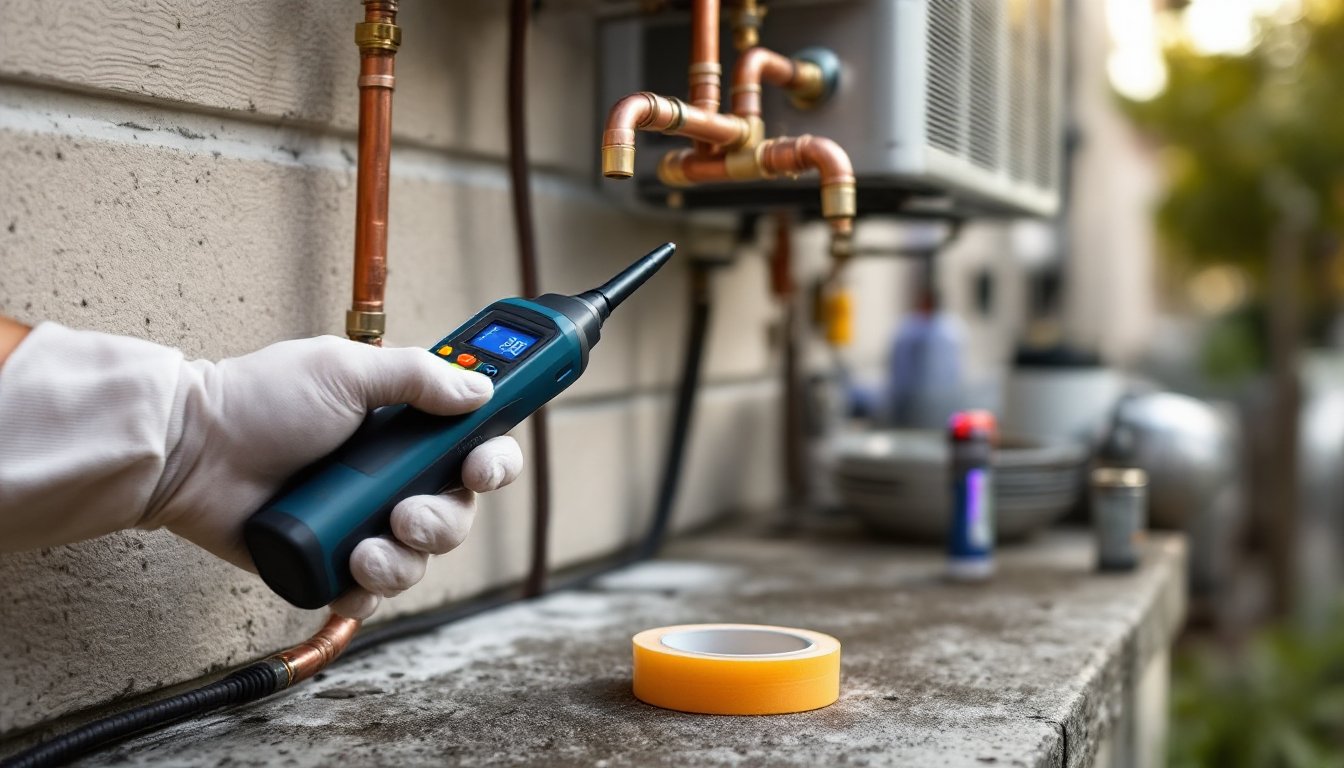
Electronic leak detectors (also called refrigerant detectors or sniffers) are battery-powered tools with a sensitive probe that draws air samples. When the probe encounters refrigerant vapor, it triggers an audible beep and often a visual indicator light or display. Models range from simple entry-level units ($30–$60) to professional-grade devices ($200–$400).
Entry-level detectors work reasonably well for major leaks (refrigerant escaping at a noticeable rate), but they can miss slow seeps. Professional versions use halogen or infrared sensing and are more responsive. Brands like Appion, Fieldpiece, and Yellow Jacket dominate the pro market, while homeowners often find mid-range units ($80–$150) striking a good balance between reliability and cost. The advantage is speed: you’ll know in seconds if a leak exists. The downside is false positives near compressor oil residue or contamination, and they’re less precise at locating the exact spot on copper tubing.
Dye-Based Detection Methods
Dye-based systems inject a fluorescent tracer dye into the refrigerant. The dye circulates with the refrigerant and seeps out wherever there’s a leak. You then use an ultraviolet flashlight (blacklight) to illuminate the escape point, the dye glows bright yellow or green under UV light. Kits typically run $20–$50 and include the dye cartridge, injector, and UV flashlight.
Dye detection excels at pinpointing the exact leak location and works on slow leaks that electronic detectors might miss. But, the process takes longer, you need to run the system for 5–15 minutes to circulate the dye, and you’ll need a second person or access to a comfortable workspace to hold the UV light steady. Dye can also contaminate the system if not handled correctly, so careful injection is critical. Some HVAC techs dislike dye because residue can gunk up components, though modern dyes are formulated to minimize this.
Step-By-Step Guide To Detecting Your A/C Leak
Using an Electronic Leak Detector
-
Safety first: Wear safety glasses and nitrile gloves. Refrigerant can cause frostbite on skin contact. Ensure the unit is running (compressor engaged) so refrigerant is circulating and vapor is present.
-
Power on the detector: Press the on button and let it warm up for 30–60 seconds. Most units beep or flash to indicate they’re ready.
-
Calibrate (if needed): Some detectors require a baseline zero reading. Hold the probe in an open area away from the A/C unit, press calibrate, and wait for confirmation.
-
Inspect systematically: Move the probe slowly around refrigerant lines, the copper tubing running from the outdoor condenser to the indoor evaporator coil. Check the low-pressure and high-pressure lines, fittings, solder joints, and valve connections. Pause for 1–2 seconds at each point.
-
Listen for the alarm: When refrigerant vapor is detected, the unit beeps or emits a steady tone. Some models display concentration levels on a screen. Mark the leak spot with a piece of tape.
-
Confirm the location: Slowly pass the probe over the spotted area again to confirm the signal. If multiple beeps occur at the same junction, you’ve found your leak.
Using a Dye-Based Kit
-
Prepare the system: Turn on the A/C and run it for 2–3 minutes to stabilize pressure and temperature. Turn it off.
-
Locate the low-pressure port: This is a larger port (usually ¼ inch) on the suction line. Consult your unit’s service manual or look for a port label. Have a towel handy, small amounts of refrigerant and oil will escape.
-
Inject the dye: Attach the injection tool to the low-pressure port following kit instructions. Depress the trigger or pump mechanism to inject the dye cartridge (usually 0.5 to 1 oz). This is a two-person job, one holds the system, one injects.
-
Run the system: Turn the A/C back on for 15–20 minutes. The dye mixes with the refrigerant and circulates throughout the system.
-
Inspect with the UV flashlight: Turn off the system and wait 10 minutes. Use the UV flashlight provided in the kit to scan the same areas: lines, fittings, coils, and valve stems. Any leak will glow bright yellow or neon green under the light, impossible to miss.
-
Mark and document: Use painter’s tape to mark the leak, take a photo, and note the location (e.g., “rear condenser aluminum coil, lower right corner”). This helps the technician if you decide to have it serviced professionally.
Both methods work best in a cool, shaded area and take only 5–10 minutes if you’re organized. Electronic detectors suit quick confirmation: dye excels when you need to find the exact spot or suspect a tiny seep.
When To Call A Professional HVAC Technician
Finding the leak is one thing: fixing it safely is another. Refrigerant work carries legal and safety requirements in most jurisdictions. In the United States, federal law (EPA Section 608) requires that anyone handling refrigerant be EPA-certified. Venting refrigerant into the air is illegal and carries significant fines.
You can locate and document a leak yourself, but actual repair, whether patching a coil, replacing a valve, or recharging the system, requires a licensed HVAC professional. Attempting to seal a leak with epoxy or sealant products marketed to homeowners is risky: these can clog the expansion device, damage the compressor, or create future problems. A real repair involves identifying the root cause (corrosion, vibration, manufacturing defect), addressing it properly, evacuating the system, and recharging with the correct refrigerant type and amount.
Based on guides discussing Freon leaks and professional standards, expect a leak repair to run $400–$1,200 depending on location and severity. If the evaporator coil is leaking (inside your furnace or air handler), replacement can exceed $1,500. Get quotes from two or three HVAC contractors: HomeAdvisor and similar sites let you request estimates and compare pricing in your area. Some leaks justify repair: others (especially on systems over 15 years old) might lead you to replace the entire unit. A professional will advise you on the best path forward once the leak is identified.
Conclusion
An A/C leak detector puts you in control of your cooling system’s health. Whether you choose a quick electronic scan or invest time in dye-based precision, the five-minute inspection catches problems before they spiral into expensive failures. Once you’ve identified the leak, calling a licensed HVAC technician ensures it’s fixed correctly and legally. Early detection, paired with professional repair, keeps your air conditioner running efficiently for years to come.