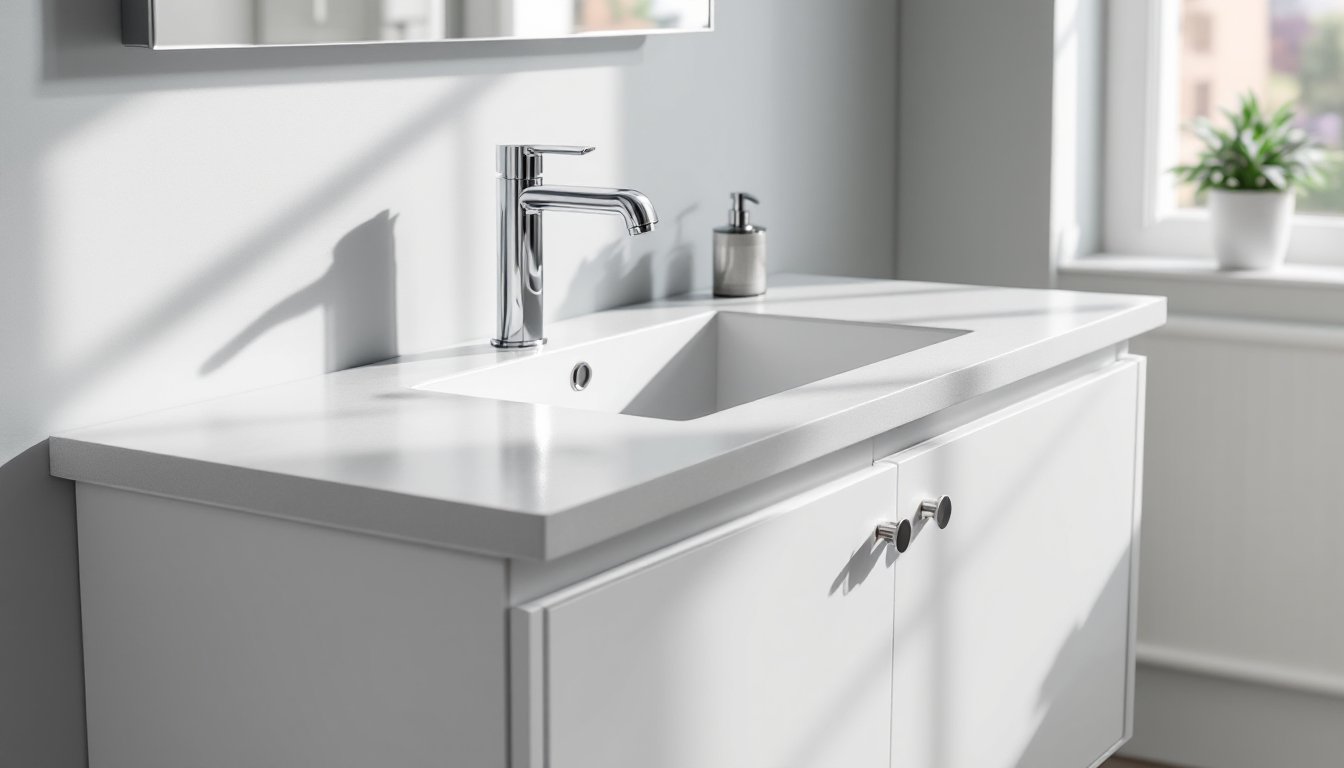
A 15-inch deep bathroom vanity strikes a sweet spot for homeowners working with tight spaces or modern minimalist layouts. Unlike standard 18–21-inch vanities that can overwhelm a small bathroom, a 15-inch deep vanity maintains functionality while preserving floor space for movement and comfort. Whether you’re renovating a powder room, updating a guest bath, or working within a compact primary bathroom, understanding your options for 15-inch deep vanities with integrated sinks will help you make an informed choice. This guide walks you through the key considerations, available configurations, and installation essentials so you can select and install the right vanity for your space.
Table of Contents
ToggleKey Takeaways
- A 15-inch deep bathroom vanity with sink maximizes usable floor space in compact bathrooms while maintaining full functionality compared to standard 18–21-inch models.
- Choose between wall-mounted (floating) vanities for visual lightness and floor accessibility, or freestanding units for easier installation and flexibility.
- Quality cabinet materials and water-resistant finishes—including solid wood, plywood veneer, or sealed particleboard—determine durability and longevity of your vanity.
- Proper plumbing rough-in, solid backing board installation for wall-mounted units, and 100% silicone caulking are critical to prevent water damage and ensure a reliable installation.
- Single sink configurations in 24–36 inch widths paired with undermount, drop-in, or integral sink options let you match both aesthetic and practical needs for modern bathroom designs.
Why Choose a 15-Inch Deep Vanity for Your Bathroom
A 15-inch deep vanity addresses a real constraint many homeowners face: limited bathroom square footage. Standard residential code doesn’t dictate vanity depth, but the International Residential Code (IRC) does require adequate clearance and accessibility in front of the vanity (typically 21 inches of space). A 15-inch depth leaves more usable floor area compared to a 21-inch vanity, which is especially valuable in powder rooms, hallway baths, or homes with older, smaller layouts.
Beyond spatial efficiency, a shallower vanity often costs less than full-depth models because it uses fewer materials. You’ll also encounter fewer obstructions when plumbing underneath, drain lines and supply tubes can run more compactly. This matters if your bathroom has limited wall cavity depth or if you’re working around existing framing that you’d prefer not to modify.
Design-wise, 15-inch vanities fit modern aesthetics that favor clean lines and openness. They work well in contemporary, minimalist, and Scandinavian-inspired bathrooms. If you’re planning a renovation around a specific design direction, a shallower vanity often feels intentional rather than cramped.
Types of 15-Inch Deep Bathroom Vanities and Sink Configurations
Single Sink Vanities
Single sink vanities in the 15-inch depth category typically range from 24 to 36 inches wide, with a standard faucet opening and one basin. A 30-inch single vanity is common and balances usability with footprint, large enough to accommodate grooming tasks and a faucet, small enough to fit tight spaces.
Choose between ceramic, porcelain, stone, or composite countertop materials. Ceramic and porcelain are budget-friendly and durable: stone (granite, marble) costs more but offers visual impact: composite materials (engineered quartz) provide durability and consistency at a mid-range price. The sink bowl itself can be undermount (cleaner look, harder to install), drop-in (sits on the counter surface, easier), or integral (sink and counter are one piece, very clean). Undermount sinks require solid countertop support and waterproof caulking, not the best choice if you plan future modifications.
Wall-Mounted vs. Freestanding Options
Wall-mounted (also called floating) vanities have no legs and attach directly to the wall studs via a mounting bracket system. They create visual lightness, make cleaning floors easier, and expose plumbing, helpful for troubleshooting. But, they require solid backing support and studs where you plan to mount. If your bathroom walls are primarily tile or thin drywall over hollow spaces, you’ll need to install blocking or a backing board (typically 3/4-inch plywood) between studs before mounting.
Freestanding vanities sit on the floor and have a cabinet base with or without legs (called a skirt or apron). They’re easier to install, just level, connect plumbing, and secure the faucet, but they consume more visual floor space and can be trickier to clean around. Freestanding units work well if you’re renting or want flexibility to relocate: wall-mounted vanities are better for permanent installations where you can work with wall structure. Forums like Houzz discussions reveal that small bathroom shoppers often prefer wall-mounted designs to maximize usable floor space, even when plumbing access becomes slightly more complex.
Key Features and Materials to Consider
Examine cabinet construction first. Solid wood (maple, oak, birch) is durable and repairable but costly and susceptible to moisture if not sealed. Plywood with veneer offers a middle ground, good durability at lower cost. Particleboard with laminate is budget-friendly but prone to swelling if water seeps into unfinished edges: ensure the cabinet has a water-resistant finish and sealed seams.
Faucet style and spout reach matter in a 15-inch-deep vanity. A standard single-handle faucet with a 4-inch reach (measured from the basin edge) works fine. Wall-mounted faucets save counter space but require wall plumbing penetrations and reinforcement. Centerset faucets (single mounting hole, handles and spout pre-aligned) are standard: widespread faucets (three separate holes) look upscale but need extra counter depth, risky in a shallow vanity.
Storage is limited in a 15-inch cabinet, so plan accordingly. Single-door vanities offer a compact footprint: single-drawer models add vertical storage. Soft-close hinges and drawer slides reduce slamming and add longevity (they cost $50–150 more but last longer and feel premium). Open shelving below adds visual interest but sacrifices privacy for supplies.
Damage-prone areas include the cabinet bottom (water splash during sink use) and the wall behind the vanity. Waterproof backer board, water-resistant paint, or tile behind the vanity prevents rot. If you choose drywall, use moisture-resistant (green-board) drywall, prime it, and paint with semi-gloss or tile-friendly paint. Many renovation pros and design sites like Remodelista emphasize that prep finishes often outlast the fixture itself.
Installation Tips and Space Planning
Start with exact measurements. Measure the wall width, distance from adjacent fixtures (toilet, tub edge, door swing), and height from floor to any existing shelf or mirror. Most codes require at least 15 inches of clearance on either side of a vanity for accessibility: verify your local IRC guidelines. Mark stud locations with a stud finder, you’ll need them for wall-mounted units or for reinforcing the wall behind the sink.
Prepare the rough-in plumbing before installing the vanity. The hot and cold supply lines should terminate about 4–6 inches above and 4–6 inches to either side of where the faucet will sit. Drain lines need adequate slope (typically 1/4 inch per foot downward) and a properly vented vent stack to prevent slow drains and trap seal failure. If plumbing rough-in is missing or misaligned, hire a licensed plumber, this is structural work that impacts home safety and resale.
For wall-mounted installation, locate studs and install a 3/4-inch solid backing board (spanning at least two studs, typically 16 inches on center) at the height where the mounting brackets will sit. Use lag bolts or heavy-duty anchors rated for the vanity weight. Never rely on toggle bolts in hollow drywall, they’ll tear out under the weight of water-filled basins and daily use.
For freestanding units, position the vanity, connect the P-trap drain (confirm it slopes downward), tighten the shutoff valves on the supply lines, and connect the faucet’s inlet lines. Check for leaks by running water for 2–3 minutes and inspecting under the vanity. Use shims to level the unit front-to-back and side-to-side, uneven surfaces cause doors and drawers to swing or stick.
Seal the gap where the vanity meets the wall with 100% silicone caulk (not latex), which stays flexible and resists mildew. Caulking prevents water from wicking behind the vanity and causing rot. Apply caulk in a continuous bead, smooth it with a wet finger, and let it cure 24 hours before splashing water.
Wear safety glasses and work gloves when handling plumbing components and cutting drywall or tile. If you’re unfamiliar with plumbing code or electrical work (for vanity lighting), bring in a licensed professional, mistakes here are costly to fix and unsafe. Resources like HGTV showcase real renovation projects that highlight both successful installs and common missteps.
Conclusion
A 15-inch deep vanity with integrated sink is a practical choice for compact bathrooms and modern design schemes. By understanding your configuration options, prioritizing durable materials, and investing time in proper installation or professional help, you’ll end up with a fixture that looks polished and functions reliably for years. Measure twice, prep the wall and plumbing properly, and don’t rush the caulking, that’s where homeowners often lose water resistance down the line.