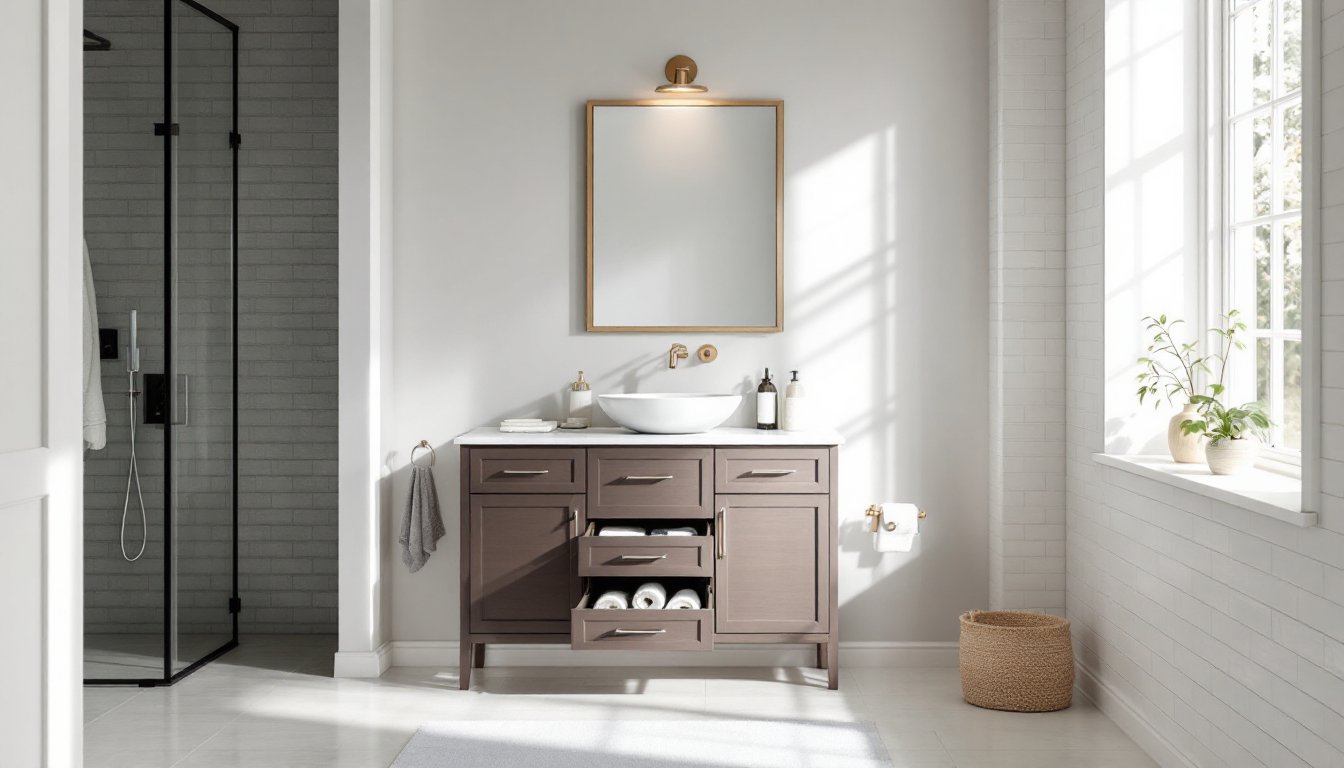
A 46-inch bathroom vanity strikes the sweet spot for most homeowners, wide enough to feel functional without dominating the room. Whether you’re updating a powder bath or carving out space in a tight master bathroom, a vanity in this size offers genuine storage, decent counter space, and the flexibility to fit most layouts. This guide walks you through what matters before you buy, how to install one yourself, and where to find options that won’t expensive.
Table of Contents
ToggleKey Takeaways
- A 46-inch bathroom vanity offers the ideal balance of functionality and space efficiency, fitting most layouts while providing genuine storage and counter space without overwhelming the room.
- Standard dimensions for a 46-inch vanity are 46 inches wide, 18–22 inches deep, and 30–36 inches tall; always account for door clearance, plumbing rough-ins, and the building code requirement of 21 inches of clear floor space in front.
- Material choice determines durability and maintenance: solid wood ($600–$1,500) looks beautiful but needs regular sealing, plywood with veneer ($300–$800) balances quality and longevity, while budget MDF ($150–$400) requires excellent ventilation and replacement within 5–7 years.
- DIY installation is straightforward for replacing an existing 46-inch vanity—shut off water, disconnect plumbing, level and shim the cabinet, bolt to studs, and reconnect supply and drain lines—but moving plumbing requires a licensed plumber.
- Soft-close hinges and drawer slides ($50–$150 more) significantly extend vanity lifespan and quality feel compared to cheap hardware that wears out in 3–5 years.
- Budget ranges from $200–$500 for builder-grade vanities to $1,200–$3,000+ for custom cabinetry, with online retailers like Wayfair and Home Depot offering quick shipping and customer reviews to guide your purchase decision.
What To Know Before Buying a 46 Inch Vanity
Space Requirements and Layout Considerations
Before you measure, understand what “46 inches” actually means. Most vanities measure 46 inches wide (wall to wall), 18–22 inches deep (front to back), and 30–36 inches tall from floor to countertop. Measure your bathroom wall carefully, don’t forget to account for doors swinging open, plumbing rough-ins, and clearance from adjacent fixtures.
Build code typically requires a minimum of 21 inches of clear floor space in front of a vanity, and most bathrooms work best with at least 30 inches to comfortably stand and move. If you’re replacing an existing vanity, you’ve already got plumbing stubbed out: if you’re moving it, factor in the cost of rerouting supply lines and drain stacks, that usually means hiring a licensed plumber.
Material Options and Durability
Solid wood vanities (oak, maple, cherry, or walnut) age beautifully but demand upkeep in humid bathrooms. Finish peels, wood swells, and moisture sneaks into seams. Budget $600–$1,500 and plan on resealing or refinishing every few years.
Plywood with veneer hits the middle ground: more water-resistant than solid wood, looks solid, and costs $300–$800. Quality veneers last 10–15 years before bubbling appears, especially around sink penetrations.
MDF (medium-density fiberboard) with laminate or paint is budget-friendly ($150–$400) but won’t survive prolonged moisture exposure. Water soaks in, swells the core, and the cabinet fails. Pick this if you’ve got excellent ventilation and don’t mind replacement in 5–7 years.
Engineered stone or quartz counters resist stains and bacteria better than cultured marble, though they cost more upfront. Cultured marble is lighter and cheaper but scratches easier and can yellow over time.
Style and Design Choices for Every Aesthetic
A 46-inch vanity works across contemporary, farmhouse, transitional, and traditional spaces, the key is matching door style and finish to your overall theme. Contemporary vanities favor clean lines, flat-panel doors, and matte or glossy finishes in white, gray, or black. Farmhouse leans into shaker or beadboard doors with natural wood or whitewashed tones. Transitional splits the difference: simple raised-panel doors in soft whites or warm grays.
Counter overhang matters too. Typically, 1–2 inches of overhang past the cabinet softens the look and protects toes. A generous 3-inch overhang reads more upscale but can feel space-consuming in tight bathrooms. Top-mounted sinks sit on the counter: undermount sinks are cleaner but cost $200–$400 more and require reinforced engineered stone or quartz to avoid cracking. Vessel sinks are trendy, though they sacrifice counter space and catch dust around the rim.
For inspiration on curated designs and real-world room transformations, HGTV offers home design shows and renovation ideas that showcase vanity styles in context. You’ll also find detailed product galleries and design sourcebooks on Remodelista if you want to study finishes and countertop pairings before committing.
Installation Tips for DIY Success
If you’re replacing an existing vanity, the job is straightforward: if you’re moving it or installing from scratch, call a plumber. Here’s the DIY path for a standard swap:
Step 1: Turn off water and drain the system. Shut off the supply valves under the sink. Loosen the compression fittings connecting supply lines to the faucet, use two adjustable wrenches (one to hold the nut, one to turn the fitting).
Step 2: Disconnect the drain. Unscrew the P-trap underneath. Have towels ready: some water stays in the trap. Unscrew the vanity’s drain collar from below if it’s a standard basket strainer.
Step 3: Remove the old vanity. Check if the countertop is glued or screwed. Caulk around the backsplash often holds the top in place: cut it free with a utility knife. Unbolt the cabinet from the wall studs using a power drill. Enlist a second pair of hands, a 46-inch vanity with top weighs 80–150 pounds.
Step 4: Prepare the wall. Sand off old caulk and residue. Check that the wall is level with a 2-foot level: most walls aren’t perfectly plumb or level, so shim under the cabinet’s base with composite shims until it sits flat and level. This prevents the doors from binding.
Step 5: Bolt the vanity to studs. Pre-drill holes through the back of the cabinet into studs at 16-inch centers. Use 2.5-inch wood screws or ¼-inch lag bolts depending on your cabinet’s mounting rail thickness. Don’t overtighten: you’ll crack the back.
Step 6: Connect supply and drain. Use new compression fittings if old ones are corroded. Wrap threads with plumber’s thread-seal tape (PTFE), three to four wraps clockwise. Reconnect the P-trap and basket strainer, hand-tighten, then snug with a wrench. Test for leaks before caulking.
Wear safety glasses when working under the sink: nitrile gloves protect from old gunk in the trap. Use a headlamp if your bathroom lacks a light under the vanity.
Common missteps: shimming unevenly (doors swing open or slam), over-tightening mounting bolts (cracks the back), and forgetting to turn off the water before unscrewing fittings (water everywhere). Take your time on shims, they’re worth getting right.
Storage Solutions and Functionality Features
A 46-inch vanity typically houses one or two sinks. A single-sink model gives you one open bay below the counter, typically 18–24 inches wide, for storing cleaning supplies, towels, or a small rolling cart. Two-sink configurations divide the space, so you get two smaller storage areas. Drawer depth varies: shallow drawers (4–6 inches) hold grooming supplies well and avoid hitting your legs when you’re bending. Deeper drawers (8–12 inches) steal toe space but offer more volume.
Look for models with soft-close hinges and drawer slides. They cost $50–$150 more but last longer and feel solid. Cheap glides wear out in 3–5 years and develop squeaks. Shelves inside the open bay add flexibility, removable shelves let you adjust for taller bottles or towel stacks.
Don’t forget to measure underneath for your actual plumbing. A widespread faucet (handles and spout separate, 8 inches apart) and center-set faucet (handles built into the spout, 4 inches apart) fit most 46-inch tops, but the drain location and hot/cold supply lines vary. Ask the cabinet maker or retailer about predrilled holes and spillway clearances. A complementary mirror and light above the vanity should land 75–80 inches from the floor to eye level for most adults: consider this before buying a tall vanity.
Budget-Friendly Alternatives and Where to Shop
New construction or builder-grade vanities run $200–$500 and rarely disappoint if your bathroom is modest and you plan to upgrade in 5–7 years. Home improvement retailers (big-box stores, online marketplaces) stock stock sizes and ship in 1–2 weeks. Refurbished and floor-model vanities, scratch-and-dent sales, can save 20–40% if you don’t mind minor cosmetic flaws. Outlet furniture stores sometimes carry overstocks at steep discounts.
Custom cabinetry runs $1,200–$3,000+ and takes 8–12 weeks but lets you choose exact wood, finish, and hardware. Local cabinet shops often beat big retailers on lead time and can adapt designs to awkward walls or add custom features like a makeup desk or integrated towel warmers.
Online retailers like Wayfair, Lowe’s, and Home Depot let you filter by dimension, material, and style: read reviews and photos from actual buyers before clicking “buy.” For a specific contemporary option, a 46-inch contemporary single sink bathroom vanity on Houzz provides detailed specs and customer feedback.
Price varies wildly by region, shipping (free vs. $200+ delivery and installation), and current material costs. Request itemized quotes if you hire an installer: labor typically runs $200–$400 per day. A simple swap takes 4–6 hours: moving plumbing or wall framing adds days and cost. Set a realistic budget and factor in contingencies, old walls hide surprises.