Water leaks hiding behind walls, under floors, or in underground pipes cost homeowners thousands in damage and wasted water before they’re spotted. An acoustic leak detector uses sound technology to pinpoint exactly where water is escaping, without tearing into your walls or digging up your yard. Whether you’re hearing faint hissing behind a wall or suspect a slow drip somewhere in your plumbing, this handheld tool can save you time, money, and the headache of guessing. This guide walks you through what these detectors do, how to use them, and when to know you need professional backup.
Table of Contents
ToggleKey Takeaways
- An acoustic leak detector uses sensitive microphones to amplify the sound of escaping water, allowing you to pinpoint hidden leaks without invasive wall-cutting or yard-digging.
- Water pressure in your home’s pipes constantly broadcasts leak location through vibrations, making acoustic detection most effective during regular daytime water usage when pressure is steady.
- A mid-range acoustic leak detector priced between $200–$400 typically pays for itself by preventing one major water damage claim and avoiding costly contractor diagnosis fees.
- Trace suspected leaks by moving the probe along your water supply line and marking the spot where the sound peaks—this indicates the leak’s location.
- Call a licensed plumber if you pinpoint a leak requiring repair, detect leaks in buried lines, or if local code mandates professional work on main water lines.
What Is An Acoustic Leak Detector?
An acoustic leak detector is a handheld device that amplifies and listens for the sound waves created by escaping water. Water under pressure rushing through a crack or pinhole in a pipe makes a distinct hissing, whistling, or gurgling noise. The human ear rarely catches it, the sound is too faint or travels through materials that muffle it. The detector’s sensitive microphone picks up vibrations in pipes, walls, and soil that ordinary hearing misses, then amplifies them so you can hear them through a headset.
Think of it like a stethoscope for your plumbing. The device doesn’t find water itself: it finds the noise that water makes when it leaks. That’s a crucial distinction. A leak doesn’t have to be gushing to create a detectable sound. Even a slow drip or a pinhole loss from a pressurized line generates acoustic energy that propagates through the piping material and surrounding structures.
How Acoustic Leak Detection Works
The physics is straightforward: water flowing under pressure vibrates the pipe wall and any material touching it. That vibration travels outward in all directions. A sensitive acoustic detector picks up those vibrations and converts them into sound you can hear.
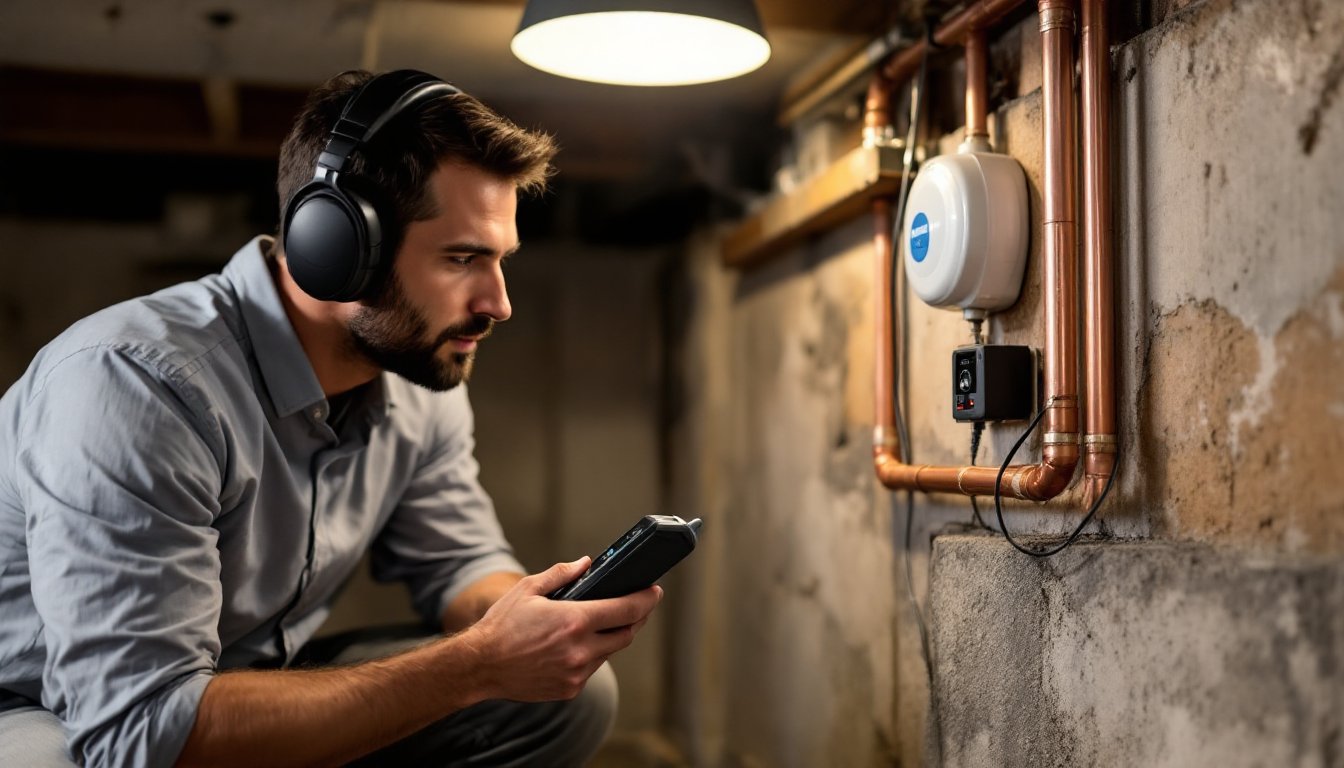
Here’s the practical sequence. You put on the headset and hold the microphone probe against a suspect area, a water meter, a pipe fitting, drywall, or the ground above a buried line. Adjust the amplification dial. If a leak exists downstream in the pipe, you’ll hear a distinctive sound: often described as a hiss, whistle, or crackling static. By moving the probe along the pipe route or up and down the wall, you can narrow down where the noise is loudest, pinpointing the leak’s location.
Distance matters. The closer you are to the leak, the louder the sound. A pinhole leak in a pressurized copper line three feet away will sound louder than the same leak twenty feet down the pipe. That’s how you triangulate: test multiple points along the suspect pipe run, then locate the spot where the sound peaks. Professional plumbers often use this method before cutting into walls or digging trenches, because it saves hours of guesswork.
Why Use An Acoustic Leak Detector For Home Leaks
Finding a hidden leak the old way, waiting for a water stain, mold, or a spike in your water bill, is expensive and slow. By the time you see evidence, the leak has often caused structural damage, mold growth, or thousands of gallons of water loss.
An acoustic detector lets you act fast. Water pressure in your home’s main line or supply pipes is constant during the day, so active leaks are always broadcasting their position. A $200–$400 detector pays for itself after preventing one major water damage claim. It also saves contractor callout fees if you can narrow down the problem area before calling in a licensed plumber.
Another advantage: no invasive diagnosis. A plumber might recommend opening walls or digging up landscaping to locate a suspected leak. An acoustic test is non-destructive. You listen, you locate, then you decide what repairs to make or whether a pro is needed. For slow leaks in supply lines, the kind that steal water silently for months, this tool is often the only practical way to catch them before catastrophe strikes.
Types Of Acoustic Leak Detectors For Homeowners
Two main categories exist: basic stick microphone probes and more advanced digital units with earpieces.
Stick microphone detectors are the simplest. A long, narrow probe (usually 6–12 inches) with a microphone at the tip plugs into a small amplifier box with a volume dial and headphone jack. You press the probe tip against pipes, walls, or soil and listen. These are affordable ($80–$250), durable, and need no software. The tradeoff: you rely entirely on your ears to judge sound intensity and distinguish a leak from background noise.
Digital display or recording models show frequency readings, decibel levels, or allow you to record and replay audio. Some include two separate microphone probes for simultaneous comparisons. These run $250–$800 and give objective data, which is useful if you’re documenting leaks for insurance or contractor quotes. But, they’re overkill for a one-time home inspection.
For a homeowner doing occasional leak detection, a mid-range stick microphone detector, such as models from electronics supply or plumbing retailers, offers the best value. Many contractors use these same tools daily. Read reviews mentioning sensitivity, cord length, and battery life before buying. A poorly-shielded unit picks up electrical hum and won’t help you isolate a faint leak.
Step-By-Step Guide To Using An Acoustic Leak Detector
Before You Start
Confirm your water is supplied at typical pressure (usually 40–80 psi for residential homes). If pressure is too low, leaks won’t generate loud enough vibrations to detect. Check your water meter or pressure gauge, or call your water utility to confirm normal supply pressure for your area.
Choose a quiet environment. Background noise, traffic, HVAC systems, other appliances, interferes with leak detection. Test the detector in silence if possible, early morning or late evening.
The Detection Process
- Insert batteries and put on the headphones. Turn the volume dial to a low setting.
- Locate your water meter (usually in the basement, crawlspace, or buried outside under a lid). If the leak is on the supply line before your meter, test here first.
- Press the microphone probe firmly against the meter body or the pipe fitting nearest it. You’ll hear water pressure noise, a subtle hum or rush sound. This is normal.
- Listen for irregularities. A steady hum is healthy flow. A hiss, whistle, crackling, or chirping sound suggests a leak. Adjust the volume dial to hear it clearly without distortion.
- Trace the sound. Starting from the meter, move the probe slowly along the supply line toward the main shutoff valve, listening as you go. The sound will grow louder as you approach a leak’s source.
- Mark the spot where the sound peaks. This is likely where the pipe is damaged.
- Test secondary areas. If no leak is found on the main line, work through branch lines going to bathrooms, kitchen, and outdoor spigots. Be patient, some leaks are quieter than others.
Important Notes
Don’t force the probe. Gentle, firm contact is enough. A cracked or severely corroded pipe will sound louder than a tiny pinhole, so interpret results with context. If you find a suspected leak but your water meter shows no unusual consumption, the leak may be so slow it’s not yet measurable, but it’s worth monitoring or addressing soon before it worsens.
When To Call A Professional vs. DIY Detection
Use an acoustic detector yourself if you suspect a leak but have no clear evidence, want to confirm a location before calling a plumber, or need to narrow down a problem for insurance documentation.
Call a licensed plumber if you’ve pinpointed a leak and need repair, if the leak is in a buried line or under concrete (repair requires excavation and permits), if the sound is faint and you can’t confidently locate it, or if local code requires licensed work on your main water line. Many municipalities mandate that only licensed plumbers repair supply-line leaks to avoid cross-contamination and water quality issues.
Also consider when a property manager or insurance company requires a professional assessment. An acoustic test you perform is useful preliminary evidence, but insurers and contractors often want their own certified technician’s report before authorizing repairs or claims. A homeowner’s guide from Family Handyman and resources from HomeAdvisor can help you decide whether to rent a detector or call a pro. If your home has old galvanized steel pipes or cast-iron drains (common in homes built before 1980), corrosion leaks are common and often need professional replacement rather than patching.
One more reality check: if your water bill shows a sudden spike or you see mold or soft spots in drywall, get a professional inspection immediately. Acoustic detection is a diagnostic tool, not a substitute for urgent repairs when damage is already visible.
Conclusion
An acoustic leak detector transforms a frustrating guessing game into a methodical search. For under $300, you get a tool that pinpoints hidden water leaks in minutes, saving thousands in potential water damage and wasted water. Whether you own your detector or rent one from a home improvement retailer, knowing how to use it puts you in control of your home’s health. Start with the basics, trust your ears, and don’t hesitate to call a licensed plumber once you’ve located the problem. Smart diagnosis now beats expensive emergencies later.